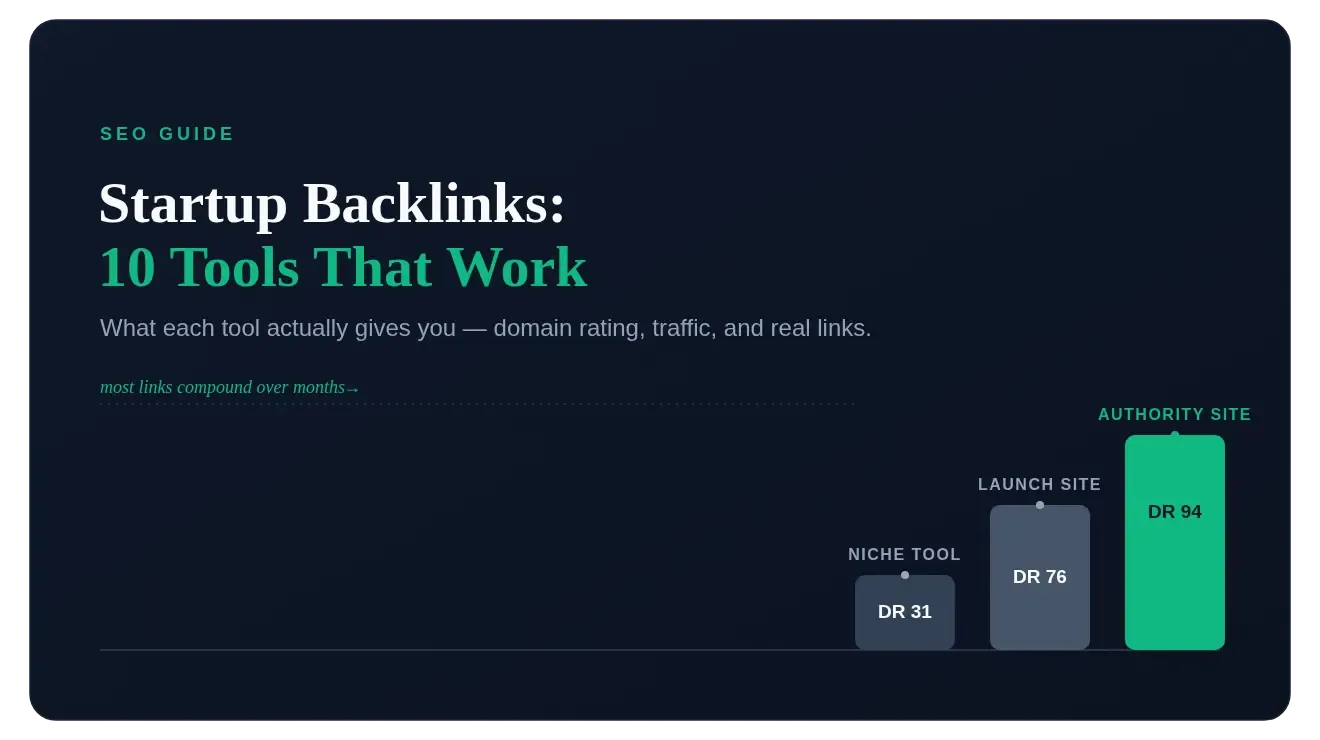
10 Ways to Get Backlinks for Your Website (That Actually Work in 2026)
If you've launched a startup, a SaaS product, or a small agency, you already know the drill: great product, decent traffic from friends and family, and then... silence from Google. The missing piece for most early-stage founders isn't content it's backlinks.
Backlinks are still one of the strongest signals search engines use to decide whether your site deserves to rank. But you don't need a $5,000/month SEO agency to start earning them. You need to know where to submit your product, and why those places actually help.
Here's a list of ten directories and communities I've used (or researched deeply) that give you a real backlink, some early traffic, and in some cases actual users not just a link with zero value.
Why backlinks from directories still matter
A lot of people will tell you "directory links are dead." That's only half true. Low-quality, spammy directories are dead. High-authority, curated, niche-relevant directories are still very much alive, because:
- They pass real domain authority (DR/DA) to your site
- They put you in front of an audience actively looking for tools like yours
- Search engines see a natural link profile, not a purchased one
- Many of them also index your profile page, giving you a second URL that can rank for "[your product] reviews" or "[your product] alternatives"
With that context, here are the ten worth your time.
1. SaaSHub (DR 79) - saashub.com
If you run a SaaS product, this is close to a must-do. Creating a listing gets you a backlink from a high-authority domain, plus referral traffic from people who are actively comparing software in your category. SaaSHub also supports "alternative to" style discovery, so you can get found by users searching for competitors.
2. AlternativeMe (DR 75) - alternative.me
This one is built entirely around comparison intent. You list your product as an alternative to an existing, more established tool, and you capture the traffic of people who are already unhappy with or just exploring options beyond that competitor. It's a smart way to piggyback on demand you didn't have to create yourself.
3. BetaList (DR 76) - betalist.com
BetaList is aimed at early-stage products and pre-launch startups. Submitting here puts you in front of early adopters who like trying new things before anyone else does. Beyond the backlink, this is genuinely useful for validating your idea with real first users.
4. OSS Gallery (DR 31) - oss.gallery
If your project is open-source, don't skip this one. The domain rating is lower than the others on this list, but the relevance is extremely high the entire audience is developers actively browsing for new open-source tools. Relevant links from a smaller site can still be more valuable than irrelevant links from a bigger one.
5. TinyLaunch (DR 72) - tinylaunch.com
A launch platform similar in spirit to bigger names, TinyLaunch gives you exposure, a backlink, and a shot at early users from a community that's specifically there to discover new products.
6. Indie Page (DR 66) - indiepa.ge
Indie Page caters to solo founders and small teams building in public. It's a good fit if your brand leans into the "indie hacker" identity - you get a relevant backlink and visibility with people who browse indie projects specifically.
7. SourceForge (DR 92) - sourceforge.net
One of the oldest software directories on the internet, and still one of the highest-authority ones on this list. Creating a software listing here gets you a genuinely high-authority backlink, along with potential traffic from users actively searching for software solutions.
8. Indie Hackers (DR 81) - indiehackers.com
Not a directory in the traditional sense it's a community. But sharing your startup journey, revenue numbers, lessons learned, or milestones tends to attract founders, spark discussion, and drive real traffic back to your site. The backlink is a bonus; the audience quality is the real win.
9. Medium (DR 94) - medium.com
Yes, the platform you're reading this on right now. Publishing well-written articles, tutorials, and case studies here does double duty: it earns you referral traffic and a high-authority backlink, and it builds your personal or brand authority as someone who actually knows their space. This article is a live example of the strategy.
10. ListedFirm - listedfirm.com
Rounding out the list is ListedFirm a directory built specifically to list all types of businesses: B2B, B2C, SaaS, and agencies. What makes it useful is that it isn't limited to one niche the way some of the others are. Your listing page gets indexed on its own, which means you pick up an additional URL that can rank in search, drive its own traffic, and act as a hub where you can showcase your full range of products and services not just a single tool.
Putting it into practice
You don't need to submit to all ten in one afternoon. A realistic approach:
- Start with the two or three most relevant to your product type (SaaS → SaaSHub, AlternativeMe, SourceForge; open-source → OSS Gallery; early-stage → BetaList, TinyLaunch, Indie Page).
- Write one solid Indie Hackers post about your launch or your numbers.
- Publish one genuinely useful article on Medium a tutorial, a case study, or a lessons-learned post rather than a thinly-veiled ad.
- List your business on a general directory like ListedFirm so you have a permanent, indexable profile beyond the launch-day traffic spike.
None of these will single-handedly get you to page one of Google. But stacked together, they build a natural-looking link profile, give you multiple entry points for organic discovery, and just as importantly put your product in front of real humans who are actively looking for something like what you built.
If you've used any of these platforms yourself, I'd love to hear which one actually moved the needle for your startup drop it in the comments.
Written by Yash Patel